
How to Buy Your First House Without Going Crazy
Buying a house is one of the most stressful things that you can go through as human beings. Especially if you’re newlyweds! Yes, it’s even more stressful than planning a wedding.
Not only do you have to decide on a house together, but once you do that, there’s also a *TON* of legal jargon, paperwork, and timely responses you have to work your way through, a 60-page inspection report to worry about, and a never-ending list of improvements you want to make. These things can wear you down to the point that you’re nearly ready to sell it before you even own it. THEN, you have to pack up everything you’ve stuffed into your little bitty apartment, and likely argue about what you should and shouldn’t toss out.

It’s. A. Lot.
Luckily for me and my husband, we had an awesome realtor, lender, and support group throughout the whole process. But we still had a plethora of challenges, especially since we’d only been married 7 months before we made this huge life change! Over the two months that we were deep in the house-buying process, we made a lot of mistakes. But you don’t have to!
Below are 4 things you can do to sail through the process without going crazy (unlike us)!
1. Schedule a date night every other week at minimum.
When you’re meeting with tons of people, packing up all of your stuff, reading through a 120-page document that puts you to sleep, and somehow managing to be a functioning human being, the weeks fly by. And date night is the last thing on the list of things to do. My husband and I literally made Google calendar invites for date night to make sure we set aside the time!
2. Get a good look at the big picture.
When we first started looking at houses, I was looking for our dream house while my husband was looking for our starter house. This caused a bit of miscommunication about what the non-negotiables were. Even if you’re able to afford your dream house right now, still do your best to keep your big picture in mind! Flooring can be changed, light fixtures can be updated, and any house can become your home with enough love and work. This is likely the biggest decision you’ve made together, so don’t let tunnel vision creep in.
3. Get a notebook/folder to store allllll of your everything in.
This is something I wish we did, looking back. There were a few deadlines we missed and fees we had to pay because we were a bit disorganized or never finished that conversation about who was in charge of talking to what utility company. If you keep a central location for all of your information (even if it’s digital), you’ll have a better chance at keeping up with it all!
4. Make sure all your finances are in order.
Buying a house costs more than just the down payment. There are a billion fees that are tacked onto the purchase, usually totaling anywhere from 2-7% of your total loan amount. And on top of that, you’ve got a bunch of moving expenses, too, from renting a truck to hiring movers. AND I won’t even mention the cost of paint & buying yard equipment & tools… you get the picture. It adds up. Even if you have it all ready and are fully prepared, go over each piece of it together. Every. Step. Of. The. Way. Money is one of the biggest causes of arguments in marriage, and with a large purchase like a home, tension can rise pretty easily. Taking the time to sit down and talk through all the little details of every expense will save you from some arguments down the road!
Having a home to grow in together is a great step for a marriage! Not only can it help you grow closer as a couple, but it can also be a great launching point on which to build the rest of your forever. It’s worth the stress, the many (many) decisions, and the late nights! Because now, you’re on your way to building your home together.
***If you or someone you know is in an abusive relationship, contact the National Hotline for Domestic Abuse. At this link, you can access a private chat with someone who can help you 24/7. If you fear your computer or device is being monitored, call the hotline 24/7 at: 1−800−799−7233. For a clear understanding of what defines an abusive relationship, click here.***
Looking for more marriage resources? Click here!
Image from Unsplash.com
What They Don’t Tell You About Postpartum Depression
“Why are you crying?!? What do you need?!?” I pleaded with my baby to somehow answer me. But when she didn’t, my anger quickly morphed into full-on rage. I tried to calm her, every way I knew how, but with slightly more force than was necessary. I shushed her, I swaddled her, I held her on her side, I gave her a paci to suck, I swung her… all with a rigid, almost robotic motion. She screamed louder.
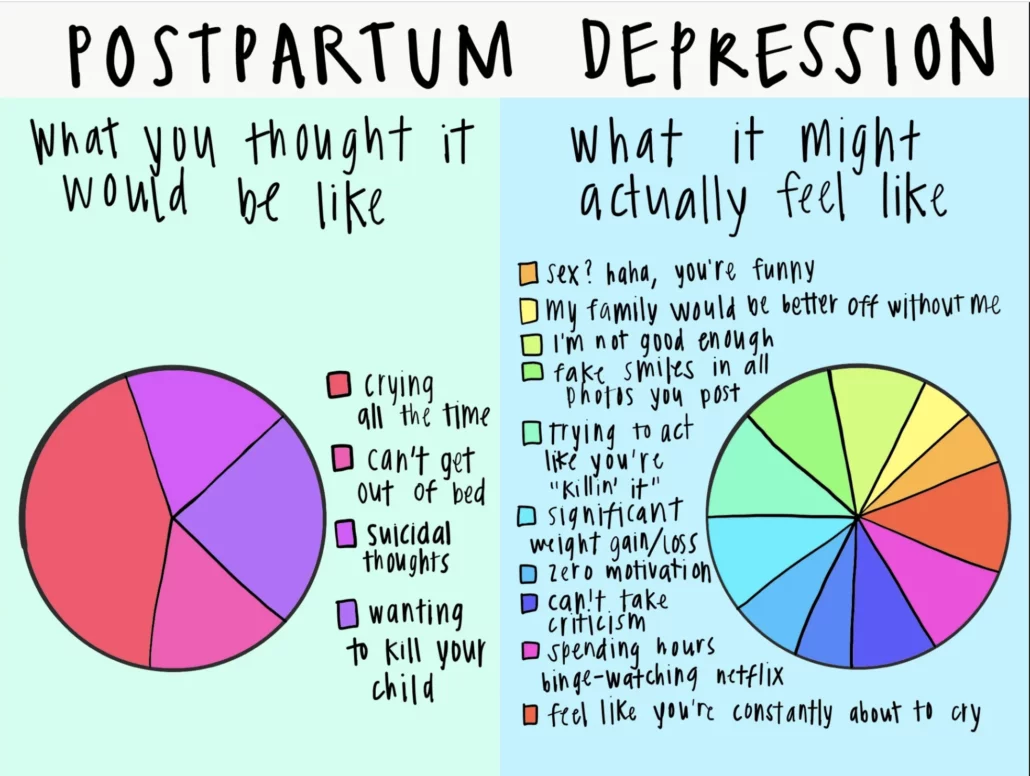
“I just checked your diaper!” I yelled. But I figured I’d check it again because we’d been at this “witching hour” for a while now. I was so beyond angry and overwhelmed that I could have thrown her across the room.
And then it hit me.
This isn’t how you treat a helpless newborn baby. This isn’t normal. A baby’s cries shouldn’t make you so angry, so full of rage. The guilt set in and after I finally got her calmed down, I collapsed into a pit of despair. I melted to the floor, a wave of intense darkness washed over me and the negative intrusive thoughts that followed marinated in my mind before I even understood what I was thinking.
You are a horrible mom. You’re not good enough. You can’t even figure out what your own child needs. You are a failure. I wanted to crawl into bed, escape everything with precious sleep. I wanted to pack my bags, get in my car and never look back. They’d be better off without you. They’d be happier.
I was paralyzed. My body so heavy, so weighed down by the enormity of the invisible load of motherhood, by sleep deprivation, by the loss of control, by a state of utter exhaustion, rage, guilt and defeat.
No one really knew what was happening with me. I hid it pretty well. I only let my rage show in the middle of the night when I was up for midnight nursing session and everyone else was sound asleep. My husband thought my increased irritability during the day was a symptom of sleep deprivation, which I’m sure it was… but it was so much more.
I actually never knew rage could be a symptom of Postpartum Depression (PPD). But after having thoughts of legitimately longing to abandon my family, I did a quick google search and discovered, sure enough, it was. (Check out this resource on postpartum rage, too!)
What They Don’t Tell You About PPD
Postpartum Depression isn’t cookie-cutter. It doesn’t always happen right after you have a baby. For me, it presented about a week after my postpartum checkup where, per the norm, they had me take the Edinburgh Postpartum Depression Scale questionnaire. I happily circled answers that made it seem like this parenting thing was a breeze. So I flew right under the radar. Maybe I was in denial, or maybe my symptoms hadn’t reared their ugly heads yet.
PPD also doesn’t always consume your every waking moment. I actually had good days. This threw me off so much. I thought PPD was supposed to consume your life 24/7. What I didn’t know is that it is totally normal to have a good week, then a bad week. Or a good two weeks and a bad weekend. Or a good day and a bad month. Symptoms fluctuate with your circumstances.
But here’s how I knew I needed help:
- I didn’t feel connected. To my baby, to my spouse, to myself. But especially to my baby. Through the endless days and nights of constantly trying to calm a screaming child, I wasn’t able to just ENJOY her. I felt so disconnected and detached from her. Instead of feeling a bond, I just felt resentment.
- I was easily irritated and angered. As I mentioned previously, my anger turned into rage as the days passed by. The littlest things would set me off like the sound of my dog’s toenails clip-clip-clipping against the hardwood floor. Or the sound of the dishwasher running while I tried to have a conversation.
- So many mood swings. One minute I felt fine, and then out of the blue, I’d be drowning in anxiety or flying off the handle with rage or sobbing uncontrollably. It started getting to the point where it interfered with my ability to function.
- I lost interest in everything. I didn’t want to do anything, with anyone, anywhere. I started feeling like nothing mattered and it would just be better to stay in, where I didn’t have to pretend to care.
- I wanted to escape. I didn’t want to be a mom anymore. I wanted to drive in a car and never return. I wanted to fall asleep and never wake up. I didn’t want to die, but I wanted to somehow leave my overwhelming life.
- I thought my own children and husband would be better off without me. This was when I KNEW something was wrong. I could justify all the other symptoms, say they weren’t that bad, that maybe I was just exhausted and it was the sleep deprivation… but thinking your family would be better off without you… That is NOT a normal thought.
Admitting the reality of the severity of my symptoms was embarrassing.
I felt so much shame and regret for all the rage I had. But luckily my husband and family were supportive. I decided it was imperative to seek professional help. However, the thought of seeing a therapist was extremely intimidating. I felt scared that they’d laugh and say, “Hunny, welcome to parenthood. Suck it up!” But, I faced that fear and after attending therapy and starting medication, my world changed. Suddenly all the obstacles that looked like insurmountable mountains, dwindled into hills that were easily scalable. Through therapy, I learned coping strategies to combat intrusive thoughts and handle my triggers. And eventually I started feeling more like myself.
NOTE:
If you feel like something just isn’t right, know that you are not alone. In fact, 1 in 7 women experience Postpartum Depression. It can affect any woman, regardless of income, age, race, culture or education. And it is NOT your fault. Please, don’t try and face it alone. Reach out to a loved one, join an online support group or schedule an appointment with a medical professional.
***For more resources on Postpartum Mental Health, check out: Postpartum Support International. You can also call the PSI Helpline at: 1-800-944-4773 (#1 En Español or #2 English) or TEXT: 503-894-9453 (English) or 971-420-0294 (Español)***
***If you or someone you know is in an abusive relationship, contact the National Hotline for Domestic Abuse. At this link, you can access a private chat with someone who can help you 24/7. If you fear your computer or device is being monitored, call the hotline 24/7 at: 1−800−799−7233. For a clear understanding of what defines an abusive relationship, click here.***
Image from Unsplash.com
Leaning Into The Stress of Parenting
I can’t believe that it is less than 90 days from Christmas! It seems like yesterday I was actually looking forward to school starting because it brought some structure back into my carefree summer lifestyle. Today, I am headlong into sports, extracurricular activities, and community service events. It’s far from carefree- it’s stressful. But that’s okay.
I feel exhausted, overwhelmed and don’t know how to get off this merry-go-round that is my life. The real dilemma for me is, do I really want to get off the merry-go-round? Should I get off? Do I know when I need to hop off? Despite all that is swirling around, I am choosing to enjoy this season in my parenting life. I realize that it will only be for a SEASON. So, how do you lean into the stress that is unavoidable?
I am the proud mother of three sons ages 21, 16 and 13. I realize that the time for me to be a Hands-On Mom is quickly coming to a close. If you are like me, living in the midst of chaos, you want to know how to keep your head above water.
Here a few tips on handling the stress of parenting:
- Plan, Plan, Plan: I am not the most organized person. I try to keep the car on the road by creating a plan. Understanding that things will probably change, I still have a calendar with everything on it color-coded. (I need the color-coding!) I include my work schedule, the boys’ school calendar, sports, meetings, extracurricular activities, and even my husband’s two work schedules.
Stress might be inevitable, but NOT having a plan dramatically increases my stress. - Learn To Say, NO: I am generally a social butterfly. I am learning to say “no” to things that are not the BEST use of my time, energy and attention. Even good things and fun things. Sometimes the answer is just, “No.” (If I say “yes,” I make sure to add it to the calendar and, yes, color-code it!)
- Empower My Children: I have to be honest and confess that, often, the reason I feel so overwhelmed is because I am continuing to do things for my sons that they can do for themselves (e.g., washing clothes.) I rationalize doing things for them by telling myself that I can do it faster and get it done correctly (e.g., not placing a red shirt in the white clothes with bleach.)
The reality is that I need to empower my children to be independent and to learn how to do certain things for themselves. And that’s less stress for me. - Follow Your Child’s Lead: If we are honest, there are activities that our children participate in that they HATE. Why do we make them do those things? We tell our kids: It looks good on your resumé. It will help you get a scholarship for college. I would have loved to have this opportunity when I was your age.
There can be a lot of truth in those statements, but what is the balance with letting our children develop their own interests? Sometimes we are stressing ourselves out as parents by rushing our kids around town to do things they don’t even enjoy. Are we really doing it for them or is it to relive our past or fulfill our own hopes and wishes? - Build Relationships: Sometimes stress is relieved in community. I am a proud Band Mom. I have created friendships with other parents whose children are in the band. We tailgate together, sit at the games together, and do the funny band dances with the band. It’s nice knowing we are in this together! (I also get to spend time with my son enjoying something that he enjoys.)
I often hear from moms dealing with an empty nest, “Enjoy your time with your kids. It flies by so fast.” They’re not wrong. In spite of this being a crazy season of life, I cherish these moments with my sons and try to handle the stress in healthy ways.
Image from Unsplash.com
What to Do When You Don’t Really Like Your In-Laws
In-laws are like a box of chocolates, you never know what you’re gonna get. They might blow through boundaries. Your in-laws might meddle in your marriage. You might even be having a hard time living with your in-laws. Possibly, they’re totally toxic. This isn’t about any of those things.
Sometimes, your in-laws are just difficult to get along with. But you want to try to have a good relationship with them.
After a few years of marriage (or less), you soon realize saying “yes” to forever with your spouse really did mean saying “yes” to forever with their family, as well as uncomfortable holidays and long weekends filled with awkward situations and tension for as long as you both shall live.
You want to like your in-laws. You’ve tried to like them. But you don’t.
SO, WHAT DO YOU DO? HOW DO YOU GET ALONG WITH PEOPLE YOU DON’T REALLY LIKE?
First of all, did you notice I said “get along with” and not “like?”
The truth is, you may never like your in-laws. And that’s totally fine. You don’t have to. It’s just important to keep the drama and the tension to a minimum as much as you can for the sake of your spouse and your children (if you have them). Even though you formed a new family when you were married, your in-laws are the reason you have your spouse and a new family to begin with. If nothing else, try to respect them for giving you your spouse.
Secondly, be as empathetic as possible.
Maybe your mother-in-law is mega passive-aggressive and a little odd, and your father-in-law is just kind of a jerk all the time. TRY (keyword here) to look past their glaring flaws and put yourself in their shoes. For instance, your mother-in-law may be passive-aggressive because she really just wants to spend more time with you but doesn’t know how to say it. Maybe she’s even a little intimidated by you. (Note: If you’re the daughter-in-law, this is NOT uncommon… I mean, you did take her place as the prioritized woman in her son’s life. Forever.)
And, maybe your father-in-law is a little unhappy with himself or unfulfilled in his life. Maybe they’re both a little off because their marriage and relationships aren’t as healthy as they used to be and they have some resentment and anger to work through. Being empathetic doesn’t mean you excuse their behavior. It just means you take a different approach to understand their motives and actions.1
Third, tell your spouse about your uneasy feelings, but remember you’re talking about their parents.
Be vulnerable and open with your spouse every chance you get. But, when it comes to talking about their parents, keep in mind that there’s a fine line between stating your feelings and being critical of their family. It’s okay to say, “I felt sad when I heard your dad talk to your mom in that tone of voice.” It’s not okay to say, “Your dad is a total jerkface. I can’t believe your mom has stayed with him this long.”
Be sensitive. The truth is, your spouse more than likely already knows there are some odd bits about their parents. They did live with them during their most formative years.
Fourth, set those boundaries with a smile.
You and your spouse want to start a new tradition around the holidays, but your in-laws insist that you come to visit them. Kindly and firmly say, “No.” If you want your in-laws to call before dropping by, tell them! Maybe you would prefer that your father-in-law not watch certain shows around your children. Let. Him. Know. Setting boundaries keeps things nice and tidy and leaves the guesswork off the table.2
ALSO, and this is very important, each spouse should set boundaries with their own family. So, you talk to your family, and your spouse talks to their family. It’s much easier for a parent to have a potentially dicey conversation with their child than with their in-law.
IF your in-laws don’t like one of your boundaries, and they throw a big fit, let them. You do you and what’s best for your family. If they get so mad that they never want to see you or speak to you again, then that boundary worked out more in your favor than you ever imagined it could. (Jk. Jk.) But, seriously. You can’t change or control their reaction. If they act immaturely about it, it’s not your fault. That’s their issue.
Fifth, different doesn’t mean wrong.
Everyone’s family has a certain way of doing things. It’s totally natural and normal for your in-laws to do things differently than what you’re used to, but it doesn’t mean they’re wrong. And it also doesn’t mean you’re wrong. It just means you’re different. For example, you grew up having a big feast on Thanksgiving. Your mom made awesome cinnamon rolls and a giant fruit tray, and your dad made the best omelets you’ve ever tasted. But, your in-laws go to McDonald’s and grab Egg McMuffins. It may seem weird to you, and not as fun or exciting, but it doesn’t mean they’re wrong. It’s just their way of doing things. Accept them for who they are and try not to look down on them for not living up to your standards or expectations.
Last but not least, texts go both ways.
Pursue your in-laws. That’s right. You heard me. Be friendly to them. Make an effort. They’re your family, too. Sending a text every now and again to check in won’t hurt you, and you know it’ll make them feel loved (even if you don’t like them). Send them cards on their birthdays. Invite them to big celebrations in your life. Let them learn more about you and your life. Who knows? You may just influence them to be a little more likable.
Marriage is hard and family is complicated. Both take a lot of work, but the reward of deep, meaningful connection is so worth it in the end. While you may never reach a level of relational bliss with your in-laws, these six guidelines should keep the drama to a minimum and maintain peace in your marriage.
SOURCES
1Limary. (2002). The mother -in -law /daughter -in -law dyad: Narratives of relational development among in -laws. ProQuest Dissertations Publishing.
2Peterson, E. & Solomon, D. (1998). Maintaining healthy boundaries in professional relationships: a balancing act. PMID: 10030211
***If you or someone you know is in an abusive relationship, contact the National Hotline for Domestic Abuse. At this link, you can access a private chat with someone who can help you 24/7. If you fear your computer or device is being monitored, call the hotline 24/7 at: 1−800−799−7233. For a clear understanding of what defines an abusive relationship, click here.***
Image from Unsplash.com
6 Ways to Deal with Emotional Pain
Have you been to the doctor’s office or emergency room and they asked you to rate your pain on a scale of 1 to 10? I really stress out over this question and probably way overthink it. I want to know what a 1 or a 10 stands for so I can answer accurately. If I am going to be healthy – physically and emotionally, I better answer honestly. People are counting on me.
After 31 surgeries in the past couple of decades, and surgery 32 right around the corner, I have probably been asked to rate my pain hundreds of times. Hundreds. By doctors, nurses, anesthesiologists, physical therapists, mental health professionals. Sometimes it’s hard to pin an exact number to your pain, but you know when it’s there. What do you do with yours?
Over the years, I’ve learned the patterns of my pain. For me, physical pain usually leads me to emotional pain like loneliness or depression. When I’m depressed, I’m more likely to do something like skip physical therapy which then prolongs my recovery time which only makes me more depressed. And the downward spiral spins…
If I am going to have a healthy relationship with myself (and my family, friends, neighbors and co-workers) it begins when I answer these questions honestly…
How would you rate… your pain today Mr. Daum, on a scale of 1 to 10? How would you rate your…
Depression…
Anxiety…
Anger…
Stress…
Loneliness…
It is so tempting to ignore or downplay our pain. Are you honest about yours?
Call in the Professionals.
Whether your pain is physical or emotional, know when to get help. Some problems are just bigger than you are. Don’t be a hero. Don’t let it paralyze you. Do not let it make you do something you’ll regret. Don’t pretend your anger is a 2 when you are at a 9. There is nothing wrong with calling in the pros.
Laugh.
Seriously, laughter is the best medicine. Mock your pain by laughing at it. Take some of its power over you away. If the people around you see that you can joke through your struggles, it puts them at ease, too. (This doesn’t mean you don’t take it seriously, just that you won’t let it steal your smile.)
Perspective.
All the perspective. True, sometimes the pain that you are feeling is the Worst Pain in the Whole Entire Universe to you in the moment, BUT there is always someone out there who would trade problems with you in a second. That doesn’t make your problems magically go away, but it gives you perspective.
Embrace the Pain.
This one is a tougher sell. Work with me here. There is a huge upside to pain. Whether it is physical or emotional, your pain is trying to teach you something. Pain is a strict teacher, but it teaches some of life’s most important lessons. Lean into the pain. Be open to the lessons. Be grateful for them…
Keep It Real.
If someone asks how I feel, I usually tell them. They asked. (You don’t have to dump EVERYTHING on them, but you’ll soon learn that your Brave Face doesn’t help anyone.) At least have one or two people in your life that you can be real with about how you feel when you are hurting or depressed or angry or stressed. These are people who will let you vent, not be dismissive, listen for a while, but then help you get centered and refocused again. These people are your angels.
Prevention.
Listen to this, the cool thing is that a lot of what keeps us healthy physically also helps keep us healthy emotionally. Good sleep. Exercise. Eating healthy. Getting out in the sun. Spending time with friends and loved ones. Gratitude. Check-ups with professionals. Listen: The absolute best pain, physically and emotionally, is the pain that you avoid.
On A Scale Of 1 to 10, How Honest Are You About Your Pain?
For more resources, see our Self-Care page here.
Image from Unsplash.com
7 Ways to Promote Good Sportsmanship
As a tennis phenom, Coco Gauff has quite the following as a result of her incredible skills on the court.
After losing at the U.S. Open to Naomi Osaka, a tearful Coco headed to the locker room when something amazing happened. Osaka approached Coco, hugged her and asked her to do the interview normally reserved for the winner with her. Coco insisted that she shouldn’t because she would cry. Osaka responded, “No, you’re good. Look, you are amazing.”
Coco joined Osaka in spite of the tears. When Osaka spoke she addressed Coco’s parents, telling them that they raised an amazing player. She said she recalled seeing them in the same training facility and that she thought it was really incredible that both of them had made it this far, again reiterating that she thought Coco was amazing. All of this came from the number one female tennis player in the world.
A winner graciously sharing the limelight with her opponent was a powerful moment on so many levels.
Perhaps parents and players alike could follow Osaka’s lead: playing hard, leaving it all on the court or the field and practicing humility whether you are the winner or not.
You can encourage great sportsmanship by intentionally teaching your kids what it looks like. Here are a few ideas to get you started:
- Bring your best to the game. Be as prepared as possible and give it your all.
- Discuss what being a gracious winner looks like and how to accept loss without being a sore loser.
- Talk about what good sportsmanship looks like during the game – playing clean and fair, helping opposing team members up, not bullying, and shaking hands at the end of the game regardless of whether you win or lose.
- Avoid letting others’ behavior dictate how you behave.
- Teach your child to learn from their mistakes versus sulking.
- Discuss the importance of following instructions.
- Talk about what it means to be a team player, even if you are the best player on the team.
It’s so easy to get caught up in the game when your kids are playing. But remember – your kids either follow your lead or are dying from embarrassment because you are that parent. Consider these things as you sit on the sidelines:
- They have a coach. Let their coach do his/her job.
- Avoid arguing with the coaches or referees.
- Be respectful of the other team regardless of their ability.
- Keep your perspective. Regardless of the sport you are watching, these are kids, and even the college students are still in their teens. Most of them will not go on to play professional sports. They play for the love of the sport.
Someone once said, “Sports don’t build character, they reveal it.”
Osaka’s gracious behavior was not a fluke. It’s something she learned over time and has shown on more than one occasion. Although Osaka was the winner, she left her opponent feeling good about herself. That’s the sign of someone who has their ego in check and understands the impact of their behavior on others. Modeling great sportsmanship and character will teach your child skills they can use on and off the field.
Image from Unsplash.com
I was irritated. More than irritated, I was ready to pounce at the next person who asked me a question, about anything. I was mentally and physically exhausted from putting in hour after hour at work, only to turn around and put in hour after hour at home, and I was over it. I was over my boss, over my hard work going unrecognized, over bearing the weight of the invisible mental load of motherhood and oh-so-over being told I was being too emotional about it all. In other words, I was suffering from BURNOUT.
ICYMI, “Burnout” is now an official medical diagnosis, according to the World Health Organization (WHO). No, we’re not talking about just being stressed out. WHO classifies burnout as a condition caused by “chronic workplace stress that has not been successfully managed.”
Symptoms include:
- Feelings of energy depletion or exhaustion
- Increased mental distance from one’s job or feelings of negativism or cynicism related to one’s job
- Reduced professional efficacy
Yup, I had it all. Check, check aaaaand check.
Thankfully I stumbled upon Burnout: The Secret to Unlocking the Stress Cycle by Emily Nagoski, Ph.D. and Amelia Nagoski, DMA. It opened my eyes to the science and reality of burnout and how to take care of myself by managing stress.
According to the Nagoski sisters, burnout is caused by chronic stress, not stressors. But what’s the difference? Stressors are external: to-do lists, bosses, all the challenges life throws our way. Stress is the neurological and physiological response your body has when you feel like you’re in danger (from a stressor).
For instance: Your boss called you out on missing a deadline at work. The stressor is your boss calling you out. The stress is the guilt, shame or embarrassment you felt from being called out.
The stress cycle begins when a stressor triggers our “flight or fight” response. It is literally our SURVIVAL mode. Think about it:
FLIGHT: If you were being chased by a lion, you would run to a safe place. Once you are safe, your body would relax.
FIGHT: If you were being attacked by a bear, but you were pretty sure you could fight it off and win, your body would gear up to attack. Once you had won and the danger was gone, your body would relax.
When you’ve finally reached safety and your body relaxes, the stress cycle is complete.
But what happens when the perceived threat is insurmountable? You’ll never outrun it and you’re not strong enough to fight it… so, you FREEZE.
And this, my friends, is where burnout happens. When we are stuck in a constant, never-ending state of stress, our bodies literally shut down and play dead in order to survive.
So is it possible to prevent burnout?
In order to fix or prevent burnout, we have to complete the stress cycle. That means, dealing with not only the stressor but the actual stress itself. If we hold our feelings in, power through the hard days, but never deal with the stress of the situation, then we keep the stress cycle open and ongoing, instead of closing it and allowing our bodies to relax.
Here are 7 ways to complete the stress cycle and prevent burnout:
- Physical Activity – In any and every form, physical activity is your BEST strategy to complete the stress cycle. You know the drill, 30 minutes a day. It can be anything that gets your body moving: running, swimming, dancing, kickboxing, etc.
- Controlled Breathing – Deep, slow breaths help regulate your body’s stress response. Try slowly breathing in for a count of 5, holding that breath for 5, then exhaling for a count of 10.
- Socialize – Casual, friendly interactions help signal to your body that you’re safe and that not everyone is crazy and that everything will be okay. Sigh.
- Laugh – Laughter is quite literally the best medicine! When’s the last time you laughed so hard your abs and cheeks hurt? Laughter like that can help shift your mood and increase relationship satisfaction.
- Affection – Finding a deeper connection with someone you love and trust is paramount. A hug or kiss is known to release a mix of the “feel good” chemicals: serotonin, dopamine, and oxytocin. Yes, please!
- Cry – Have you noticed how you seem to feel better after a good cry, even if nothing about the situation has changed? That’s because crying is actually dealing with the stress you are feeling.
- Be Creative – Allowing yourself to channel stress into art is a great way to complete the cycle. Any kind of creative activity will encourage you to freely express yourself and work through some of those big emotions.
You’ll be surprised at how implementing just one of these methods every day will change the way you manage your daily stress and prevent burnout from happening!
It didn’t happen overnight, but over time I was able to deal with the overwhelming amount of stress I was under. After a lot of introspection (coupled with a cry-sesh here and there), I realized that I had stopped taking care of my well being under the weight of the responsibility of taking care of all the other people in my life. So not only did I start making time for yoga, an exercise that I truly enjoyed, I also started a book club with my close friends to give me an excuse and motivation to read more and get together with good company on a monthly basis. Honestly, it took a lot of effort to change how I managed my stress, but changing my stress changed my entire life.
For more resources, see our Self-Care page here.
Image from Unsplash.com
Does family structure impact loneliness? For decades, concern has been expressed about how family breakdown impacts children. But the future impact on adults hasn’t received much attention. That’s changing.
In 2018, a Cigna study set off alarms about loneliness and its potential root causes. It indicated loneliness is at epidemic proportions in America.
In an article for City Journal, Kay Hymowitz, William E. Simon Fellow at the Manhattan Institute and author of Manning Up: How the Rise of Women Has Turned Men into Boysand The New Brooklyn: How to Bring a City Back, addresses how the rise in the breakdown of the family has created an increase in kinlessness. This phenomenon is impacting older adults in profound ways.
Hymowitz cites studies, including one by Ashton M. Verdery and Rachel Margolis, that showed a surge in the number of “kinless” older adults.
“A jump in the number of never-married and divorced adults is also part of the kinlessness story,” writes Hymowitz. “Baby boomers were the first generation to divorce in large numbers. They continue to split up even as they amble into their golden years. This gives rise to the phenomenon known as “gray divorce.”
Hymowitz also cites Robert Putnam’s work Bowling Alone, where Putnam raised the caution flag about the decline people were experiencing in social capital, especially the likelihood that boomers would experience a lonelier old age than the greatest generation before them.
Divorced people don’t typically have ex-spouses who are willing to take care of them in their old age or illness. Nor do stepchildren typically care for stepparents as they would care for their biological parent. Even biological parents who walked away from their children now find themselves navigating old age alone.
Verdery and Margolis summarize their findings. “Evidence is accumulating that the legacy of divorce and remarriage has a long reach straining intergenerational relationships and suppressing the support that divorced parents, stepparents and remarried biological parents might expect from their children later in life.”
Additionally, Hymowitz mentions cohabitation as a key ingredient in the rise of kinlessness.
“Superficially, cohabitation looks roughly equivalent to marriage; couples live together as ‘husband and wife,’ sharing a bed, living space, meals and in many cases children, but without the ring and city-hall certificate,” Hymowitz says. She asserts that the increase in couples who are living together has added to the fragility of post-transition relations.
Consider this:
Cohabiting couples break up faster and more often than married couples. Separated, cohabiting fathers prove more likely to withdraw from their children’s lives than divorced dads. Cohabiting and single parents have looser ties to their own parents and friends than marrieds. Plus, the Cigna study found that single parents as a whole represent the loneliest Americans.
“Even evolutionary-psychology skeptics, might notice that though marriage has shape-shifted over the centuries and across cultures, it has always defined those people – spouses, parents, children, grandparents, siblings, in-laws – to whom we owe special attention and mutual protection,” Hymowitz says. “Marriage creates kin; cohabitation does not. Some of the most crucial obligations of kinship have always been to tend to the sick and to bury the dead.”
It is worth noting that even today, the vast majority of unpaid caretaking of the aging in the U.S. is done by relatives, according to Putnam.
Hymowitz surmises that a lot of what’s happening is due to a change of what the family is. Hymowitz points out that kinless elders often show hoarder tendencies. They hang on to every stray electric bill, used coffee cup or odd bit of broken furniture. They cling to their stuff for lack of meaningful human interaction.
“Uprootedness uproots everything except the need for roots,” wrote American historian Christopher Lasch. Hymowitz believes one of our greatest challenges is to communicate that need to coming generations before they make decisions that will further fragment their lives and communities.
In conclusion, Hymowitz reminds us that the policy discussions about the troubles of the American working class and poor center on vocational and technical education, higher-paying and reliable jobs and benefits. These are necessary efforts, but they are not enough to counter the loneliness, kinlessness and despair crushing so many spirits. The solution must include what Tom Wolfe called a “great relearning.” This great relearning includes how to satisfy the human longing for continuity and connection.
Looking for more relationship resources? Click here!