
Tag Archive for: Marriage Help

Here’s the thing, whether you’ve been married for five years or 50, you are still two unique people from different backgrounds with varied life experiences. Each of you has different ingrained likes and dislikes, unique communication styles and approaches to conflict, mismatched habits, and even tiny little quirks and idiosyncrasies. You’re two “I’s.” You are gonna bicker, argue, and, yes, even fight sometimes in your marriage.

That might sound like a strange thing to say, but if you are invested in your marriage and you want it to grow, you know there will be some growing pains that have to be worked through. The enemy of a good marriage is a ho-hum marriage where people go through the motions on a daily basis with no real emotion and motivation to do anything any different. 

3 Benefits Of Fighting in Your Marriage. 

  1. You Build Trust. When you realize that your spouse will listen to your needs respectfully and make good-faith efforts to meet them, trust goes through the roof! 
  2. You Move Forward When You Don’t Hold Back. When both of you understand that you can be real, genuine, open, and transparent with each other and it is totally safe, your relationship will grow by leaps and bounds. You will reach new levels of intimacy.
  3. You Know Where You Stand With Each Other. So many couples attribute thoughts, motives, and feelings to each other and end up reacting to non-existent phantoms instead of their spouse. When you fight well with each other, it’s all on the table. And that’s a good thing!

Some people are intimidated by change (and their spouse) and they are fine to go along to get along. Some spouses are comfortable making all the decisions. But when it comes to finances, parenting, sex, and other topics, the marriage is at its best when BOTH spouses are bold and honest, and bring their differences to the table and work through them. This is what it means to be a TEAM.

The intimidated, conflict-avoidant spouse may have to learn to speak up. The intimidating, conflict-dominant spouse may need to sharpen those listening skills quietly.

There is no medal for the most passive spouse. When it comes to fighting in marriage, you may be bottling-up tensions, disagreements, hurt feelings, unmet needs, and unfulfilled expectations, and all the “little things” that accrue during years of marriage which are far more dangerous for your health and the health of your marriage. Stuffing it all down, ignoring it, or pretending everything is okay eventually leads to acidic bitterness, corrosive resentment, and a sense of entitlement to go outside your marital boundaries and do things that will devastate your marriage. Bring that stuff to the surface in a healthy, productive way.

Dr. John Gottman, researcher, writer, lecturer, and all-around couples guru said this: “Our research has shown that 69% of relationship conflict is about perpetual problems. All couples have them—these problems are grounded in the fundamental differences that any two people face. They are either fundamental differences in your personalities that repeatedly create conflict or fundamental differences in your lifestyle needs.”

Or, as I put it to my oldest son who is inching toward the altar, “Marriage is picking the set of problems you will have the rest of your life.” Doesn’t that sound romantic? He didn’t think so either. But it is so reassuring in marriage to know we are both different and it is totally okay. We might have some iron sharpening iron moments, but it’s safe and ultimately our differences can complement instead of compete.

There was a school of thought that happy couples don’t fight. The reality is that happy couples fight right. Gottman elaborates by saying that even how often a couple fights is not what determines the success of a marriage, but rather, it is how a couple fights. Respect is the name of the game. As long as couples respect each other, fighting in and of itself is not a threat to the marriage relationship.

How Can You, As A Couple, Fight Respectfully?

  • Make sure BOTH of you have space to express yourself and be heard.
  • Keep it about the problem or the behavior—not the person.
  • Avoid words like “never” or “always.” It’s never always true.
  • Don’t bring up past, settled issues or re-open healed wounds.
  • Winning the fight isn’t worth losing your spouse.
  • Compromise. You both should feel like you gave a little and got a little.
  • Apologize and forgive. (Maybe some of the fighting wasn’t so nice.)
  • End by reaffirming your love for each other. When the fight is done, it’s done.
  • DON’T intimidate, manipulate, or threaten your spouse. That’s psychological and verbal abuse.
  • It should NEVER get physical. That’s domestic violence.

Plan Your Fights.

The “Speaker-Listener Method,” created by The University of Denver’s Center for Marital and Family Studies Drs. Howard Markman and Scott Stanley, empower couples to truly communicate. Couples set aside a half-hour each week and take turns with one person as the speaker and one person as the listener. The speaker respectfully says whatever they want; the listener just listens. They then move toward a healthy, productive dialogue about the issue, hoping to get to the root cause and take the time to brainstorm solutions. 

One of the benefits of this method is that it provides room for a quiet spouse to have the floor and speak up while perhaps putting the talkative spouse in a position to truly actively listen. Another benefit of this method is that often couples realize that they have been having the wrong fight all along. (It’s not enough to “fight.” You want to get to the right fight—the one that makes the biggest difference in your relationship and your marriage. Maybe the fight isn’t really about finances, it’s about one spouse feeling like they have no voice in financial decisions.)

We’ve all kind of been trained to think that all conflict is bad and all peace is good. But in marriage, honest conflict surpasses a dishonest peace. Growth in trust and intimacy occurs where there is honest (sometimes hard) communication. You want to keep your marriage on the grow! You’ve got this!

***If you or someone you know is in an abusive relationship, contact the National Hotline for Domestic Abuse. At this link, you can access a private chat with someone who can help you 24/7. If you fear your computer or device is being monitored, call the hotline 24/7 at: 1−800−799−7233. For a clear understanding of what defines an abusive relationship, click here.***
I don’t know if I can keep doing this (marriage) much longer.” I said this statement at one point in my marriage when things felt like they were falling apart. And my wife of sixteen years has said it, too. I’ve also spoken with plenty of couples who have said things like this at some point in their marriage.

There are some commonalities research has shown can help save your marriage when it feels like it is falling apart.

Connect regularly with people who are happily married.

Notice I didn’t say perfectly married. Look for couples who are healthy. Invite them to coffee and dessert. Talk to them. Listen to them. Watch how they interact with each other. Pick their brains. Find people who will hold you accountable, not pick sides. People outside of your marriage often will see things about you that are difficult for you to see about yourselves

And disconnect from people who are not for your marriage.

People that will allow you to continually talk about what’s wrong with your spouse and constantly tell you that you’re better off without your spouse are not going to be helpful in saving your marriage.

Seek help.

There are experiences available for couples facing distress in their marriage. Some places offer classes; others have Intensive Experiences available (DivorceBusting.com, WinShape Intensives, Smalley Institute). First Things First also has free resources to use in the comfort of your own home. Additionally, you may want to find a good marriage counselor to help you walk through your issues. If there is one thing I have learned in my own marriage, it’s the longer you wait to ask for help, the harder it is to ask for help. Put your pride aside and ask for the help you need if you are currently struggling. 

Look at Your Perception of Your Marriage.

New research indicates that how you perceive the relationship and your partner’s commitment to it is the biggest predictor of the quality of your relationship. Think through what you perceive about your spouse and their commitment level. The research says that your perception accounts for nearly 50% of your relationship satisfaction. When we focus on the negative things our spouse does, we train our brain to see the negative

Communication.

Communication has always been the issue married couples say they struggle with the most. It can be frustrating when you feel like you’re never able to address and resolve the real issues because the two of you can’t figure out how to effectively express your thoughts, feelings, and desires. Since many of us marry someone with a different communication style, learning to speak, hear and be heard has proven to be less natural than we expected. I was married 7 years before I learned how to effectively communicate with my wife. It was a skill I had to learn. I had been repeating the same communication mistakes over and over. 

★ These 7 keys to communication really helped my marriage.

Don’t be afraid to lead the dance.

Yes, it takes two people to dance, but one to lead. Michele Weiner-Davis, marriage expert and author of Divorce Busting, tells couples, “If your spouse started paying more attention to you, making suggestions about trips you could go on, new hobbies you could do together, how would you be different in return?” Most say, “I would be nicer.” Then Weiner-Davis asks people to describe the ways in which they would be nicer and encourages them to start doing that immediately. So many spouses stand around waiting for the other person to just do something. If you want things to be different, don’t be afraid to make the first move.  

Don’t wait for your partner to be more likable – you be more likable,” Weiner-Davis says. “Ask yourself in what ways have you pulled back from your relationship. Your partner’s distance might be the result of you pulling away, too.”  

Practice good self-care.

Taking care of yourself can improve your marriage. Be active by pursuing interests like gardening or biking. Read some good books and practice mindfulness. By paying attention to your mental health, your perspective will often improve.

Think about your daily interactions with your spouse.

Dr. John Gottman, researcher and marriage therapist recommends a 5:1 ratio of interactions – meaning for every negative interaction you have with your spouse, you need five positive interactions to balance that one negative interaction. Expressing affection, showing appreciation, and doing small acts of kindness are positive interactions which balance the negative ones. 

Talk to each other about your needs.

When we have needs and expectations that arent being met, resentment builds. Sometimes our partner is left to figure out the expectations because they are left unspoken. Sincere, honest communication about your needs and expectations takes the guesswork out of the marriage. And, it can shed light on expectations that just aren’t realistic at the moment.

Acknowledge what you can’t fix.

Dr. John Gottman’s research has uncovered that 69% of issues in relationships are unresolvable. It’s not necessarily a bad thing. It just is. Some common differences include disciplining children, balance between home and work, and political views. Learning to communicate and manage these differences can provide opportunities for marital growth. Besides, who wants to be married to someone who is exactly like them in every way?

Forgiveness.

It has been said that lack of forgiveness is like drinking poison and expecting the other person to die. Forgiveness is a gift you give yourself as well as your mate. The act of forgiveness does not mean you condone hurtful actions; it does mean you have made an intentional decision to move on. 

Remember, you are on the same team.

At some point you began to feel like you are adversaries. Instead of attacking one another, attack the issues as two people working together on the same team. The outcome may really surprise you.

★ Saving a marriage that is falling apart is 100% possible. It will take courage, work and intentionality. Rebuilding trust, seeking to understand one another, and cultivating a culture of appreciation is a process accomplished through many small steps over time. 16 years into our marriage, we’d both tell you our feelings of despair early in the marriage were the catalyst for intentionally creating the marriage we want. 

And, we are still working on it today. 

***If you or someone you know is in an abusive relationship, contact the National Hotline for Domestic Abuse. At this link, you can access a private chat with someone who can help you 24/7. If you fear that someone is monitoring your computer or device, call the hotline 24/7 at: 1−800−799−7233. For a clear understanding of what defines an abusive relationship, click here.***
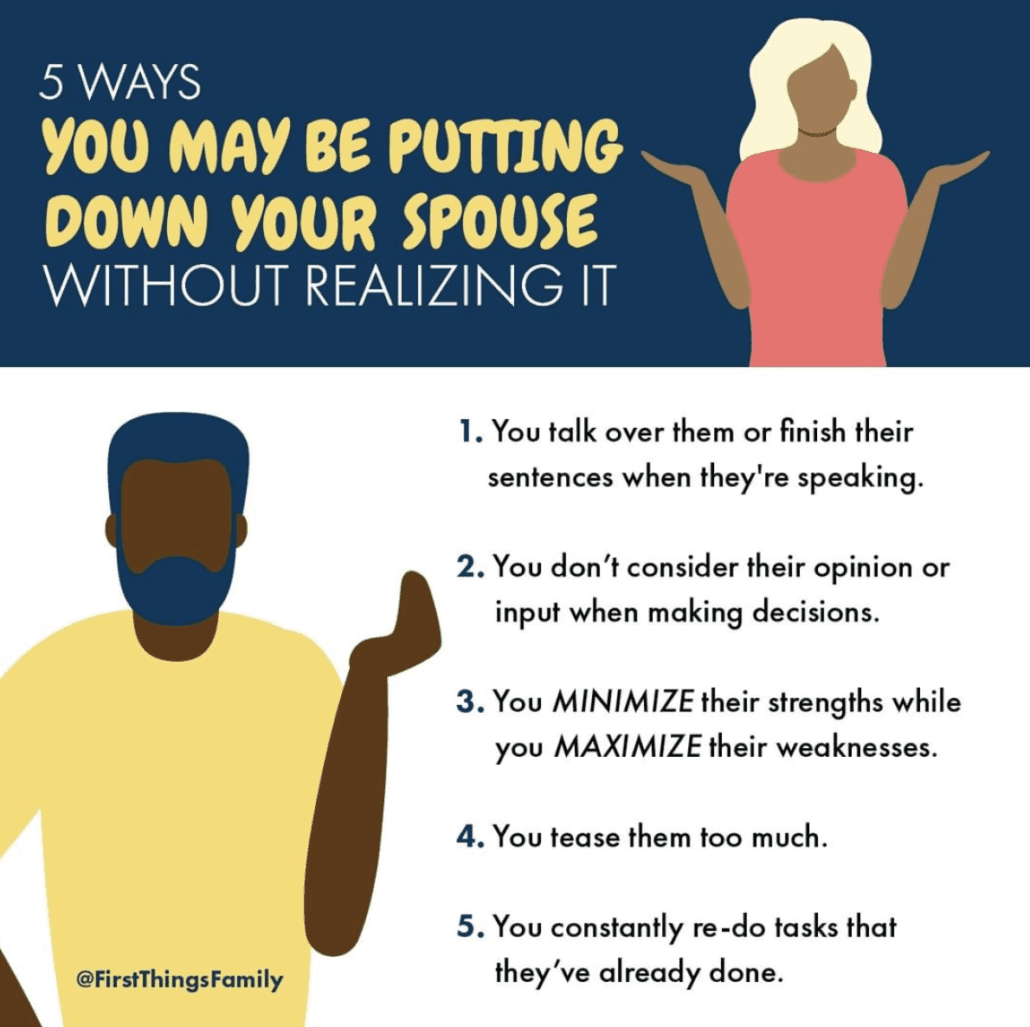
Image from Pexels.com

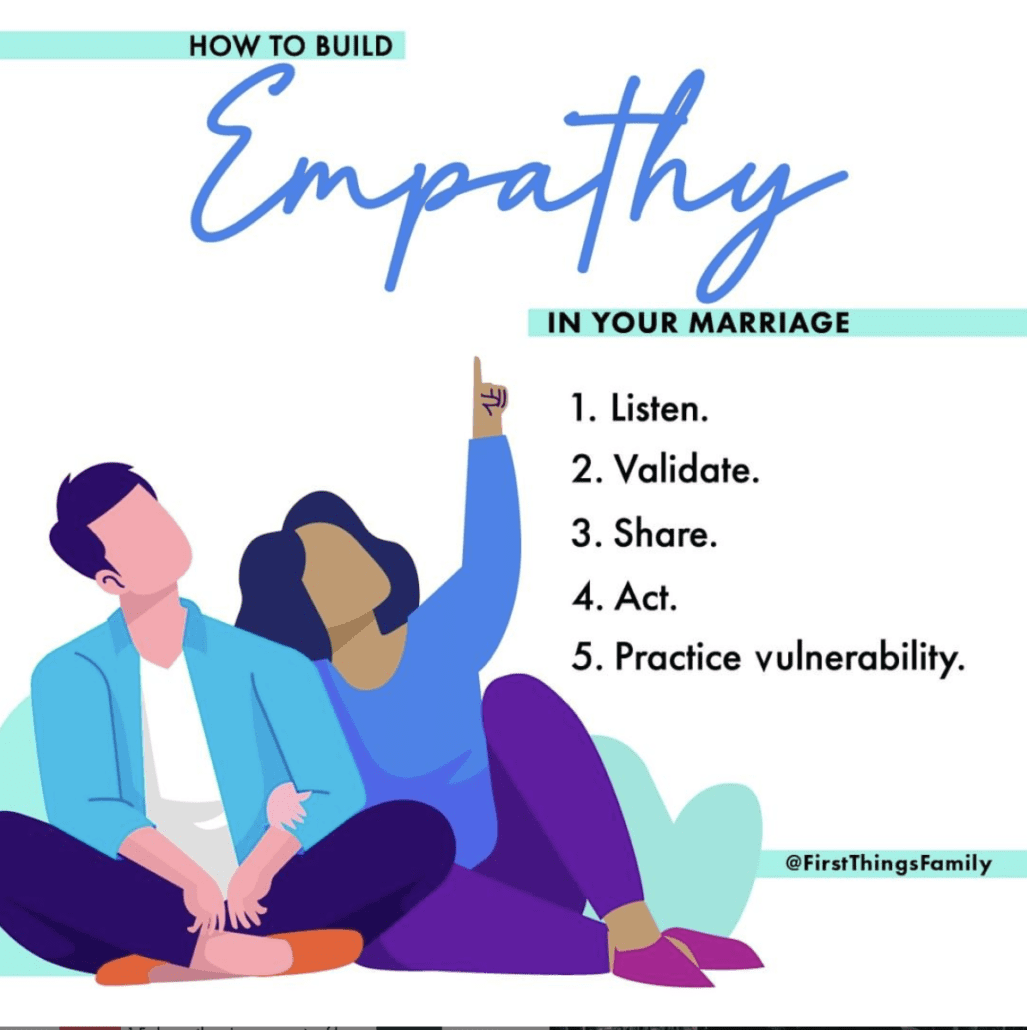
How To Build Empathy In Marriage

These 5 steps can get you started in no time.

Have you ever whipped up your favorite batch of homemade cookies to find out in the first bite that you left out that one key ingredient that makes all the difference? Empathy is that key ingredient to a great recipe for a healthy marriage that you don’t want to forget. 

A large body of research tells us the practice of empathy is essential to a thriving, happy, healthy marriage. However, many people reduce the idea of empathy to it being just “touchy-feely” or something that some people are born having, but others not so much. 

What exactly is empathy, and can you have it for your spouse if you’ve never experienced what they have experienced? 

There are many definitions out there for empathy; some have described it as the ability to put yourself in someone else’s shoes. I like the definition that U.C. Berkeley researchers Levenson and Ruef give: empathy is the ability to detect accurately the emotional information being transmitted by another person. The keywords here (in my humble opinion) are detect accurately. The goal of empathy in marriage is to understand as closely as possible what is going on in your spouse’s mind and heart at the moment. And keep in mind this is a skill that you can learn, not an inherent trait that you’re born with. 

But real marital empathy doesn’t stop with simply understanding. Empathy is an action. We find this reflected in an explanation of empathy given by Dr. Paul Ekman, who separates empathy into three parts. Cognitive empathy is what we just talked about; it allows us to imagine how someone is feeling and say Wow, that must be really tough.

Emotional empathy goes a little further to allow ourselves to actually feel what our spouse is feeling (even though we don’t have the same experiences).  It’s the same mental processes at work as when you shed tears watching a romcom or feel sadness when you witness someone who’s down and out. The thing is, you can control whether you attempt to feel what the other person is feeling. Which is good news for spouses (like you) who want to build more empathy in their marriage. 

But the third part of Ekman’s empathy triad is compassionate empathy. It balances the first two parts so that we can take empathetic action. This empathy triad, according to Ekman, keeps the whole person in mind, making empathy a work of both mind, heart, and behavior.

So here’s what this may look like in marriage. Your spouse comes home from a stressful day at work to find the kids still haven’t taken care of the dirty dishes in their rooms that they were told a thousand times to put in the dishwasher. You listen to them and try to non-judgmentally understand how they’re feeling (even though the thought of lingering dirty dishes doesn’t particularly bother you). You allow yourself to feel at least a little bit of the frustration they feel. And out of compassionate empathy, you extend a hug, thank them for all the hard work they do. Then you go upstairs to goad the ankle-biters into gathering up the fungus-laden dishes so your spouse doesn’t have to for the 1,001st time. 

Considering this trilogy-approach to empathy, how do you build empathy in your marriage? Here are some steps for couples to take: 

  • Listen. Not to judge. Not to fix. And not even to retort. Listen simply to grasp what your spouse is feeling with as much accuracy as possible. Listen closely to your spouse to understand their feelings in the same way you’d listen to a teacher to understand how to do calculus. 
  • Validate. You may listen and think, Gee, I’d never get so riled up (or excited, or sad) over this. Avoid judging your spouse’s feelings based on how you would respond in the same situation. Instead, acknowledge to yourself that these are their feelings (and not yours). Respond verbally to your spouse with legitimizing replies like, “Wow, that must be frustrating,” or “I can see how you’d be excited about that.”
  • Share. Namely, your spouse’s emotional response. This may take some conscious effort on your part, especially if they are emotionally responsive to a situation in a way you wouldn’t. Truly put yourself in their shoes. See the world from their eyes. Allow yourself to experience any part of the anger, frustration, excitement, happiness, or whatever feeling they are expressing to you. (Even for the most stoic person, the more you put this into practice, the easier it becomes over time.) 
  • Act. Take what you’ve come to understand from the previous steps and respond in compassion. When you come to understand accurately the mind and heart of your spouse in a given situation, it’s easier to be in tune with what they need at that moment. Keep in mind that this very well may not be the time to “fix” their problem. A helpful trick I’ve learned is to ask my spouse, “Is this a time you want me to listen and help you figure out a solution, or would it be more helpful to listen and simply try to understand?” More often than not, she simply needs an empathetic ear and a compassionate response. 
  • Practice vulnerability. Here’s the thing: empathy begets empathy. What I mean is, it’s a two-way street. Empathy is best built when both people in the marriage open up about situations, feelings, and thoughts they simply want the other to better understand. That’s the beauty of it: the practice of empathy helps you to know that you can open up to your spouse and they’ll be non-judgmental and supportive. And they can be open with you and you’ll respond in the same way. Trust is reinforced. The marriage is strengthened. And all because empathy is that one ingredient that makes the difference in the recipe. 

Empathy is an all-important ingredient for a healthy marriage, but building it takes time. Empathy grows with momentum, especially if it hasn’t been expressed very much previously. However, you might find that if you pay close attention to the above steps, it doesn’t take long for the momentum to get rolling pretty quickly. 

Read other blogs to learn more about empathy here:

What to Do When Your Spouse Lacks Empathy

3 Ways Empathy Can Strengthen Your Marriage

How to Stop Resentment

***If you or someone you know is in an abusive relationship, contact the National Hotline for Domestic Abuse. At this link, you can access a private chat with someone who can help you 24/7. If you fear that someone is monitoring your computer or device, call the hotline 24/7 at: 1−800−799−7233. For a clear understanding of what defines an abusive relationship, click here.***

Image from Unsplash.com

There are a lot of answers to questions I don’t want to find out: How long can my car run without an oil change? Would anyone notice if I walked out of the house wearing a crop-top? 

And if you were to ask me, “Can a marriage survive without intimacy?” I’d tell you I wouldn’t want to find out. But then I’d ask, “Is that really what you mean?” 

Because there’s a big difference between surviving and thriving. I can survive wearing a crop-top out in public, but I sure as heck wouldn’t thrive (at least how I picture myself thriving). 

Do you want a surviving marriage or a thriving marriage?

Show me a thriving marriage, and I can’t help but show you a marriage chock full of intimacy

People sometimes mean different things when they say intimacy. Some refer to emotional intimacy, that affectionate, emotional connection with your spouse. 

Others take intimacy to mean, well, sex. 

And both would be right. If you do some research, you will find that these are two sides of the same coin and that emotional connection and sexual connection are inextricably linked. The quality of one has an effect on the quality of the other. 

Here’s what I mean: Jack thinks there’s a lack of physical intimacy in his marriage to Jill; sex has become mundane and much less frequent. Jill’s not too bothered by this, but believes that there’s a lack of emotional intimacy; they just don’t communicate and connect on a deep level. Jack doesn’t know much about that; he’s just hoping tonight might finally be the night. 

What Jack and Jill might want to know is that neither physical nor emotional intimacy just happens. You have to work at both with intention and gusto. 

And when Jack and Jill take the time to connect on an emotional level, their sex life can experience an uptick. Conversely, putting some more effort into their sexual relationship can easily deepen the level and bolster the volume of their emotional connection.

I like to think of it like this: building up intimacy in your marriage is like pedaling a bicycle. One pedal is emotional intimacy and the other is physical intimacy. Pushing one pedal forward brings the other around ready to be pushed. Repeat the cycle (see what I did there?) and you quickly gain momentum and acceleration. 

And there are two things I know about pedaling a bicycle: it takes work, but the more you gain momentum, the easier it becomes to push the pedals. The same goes for emotional and physical intimacy in your marriage. 

So how do you push those pedals to build intimacy in your marriage so that it will thrive? 

Make small connections throughout the day.

Key times are when you wake in the morning, before you leave for the day, when you come back together at the end of the day, and before you go to bed. Connect by bringing a cup of coffee in the morning, a goodbye hug, a hello kiss, asking, “How was your day?” Leaving love notes, or watching a funny show before bed. You choose your rhythm and kind of connection. Small things count big with intimacy. 

Carve out time to spend with your spouse.

Shoot for one date-time a week, even if it’s at home with microwaved pizza watching a RomCom. Establish some basic rules: no cell phones, no talking family business, no kids in the same room (or floor, or house). Just be with each other. 

Plan sex.

Have a Sex Schedule. Yes, you read that right. Plan the nights you’re going to have sex. This has worked wonders in my marriage. Scheduled sex helps my wife (who needs to warm up to the idea of sex sometimes) to anticipate it ahead of time. And it helps me (who needs no warming up whatsoever) to avoid wondering when the next time will be and to initiate with the confidence that I won’t be met with rejection. (A couple of caveats to scheduled sex: our rules are that either of us can call an audible and ask for a raincheck for any reason. And, unscheduled, spontaneous sex is certainly never off the table!

Dedicate to communicate daily.

Talk, talk, talk. Try to go beyond casual conversation and go deeper with personal insights, feelings, dreams, and needs. Much of our communication is like a small business meeting: Did you pay the water bill? Are you driving Little Man to practice? Google “Questions that build intimacy” and have some pillow talk.  Listen twice as much as you speak. Learn more about active listening here.

Can a marriage survive without intimacy? The truth is, yes it can, BUT it doesn’t have to. Even if you find yourself in a hard place right now where your marriage feels empty and neglected, you can commit yourself to do something different. Push one pedal and then the other. I repeat: it takes work and some time. Sometimes, one spouse in the relationship has to do the bulk of the pedaling before the other catches on. But it’s worth it. Plenty of couples have been where you are, changed up the dance, and would wholeheartedly tell you it’s worth the energy and effort to have a happy, healthy, intimate, thriving marriage. 

***If you or someone you know is in an abusive relationship, contact the National Hotline for Domestic Abuse. At this link, you can access a private chat with someone who can help you 24/7. If you fear your computer or device is being monitored, call the hotline 24/7 at: 1−800−799−7233. For a clear understanding of what defines an abusive relationship, click here.***

Image from Unsplash.com

Do you find it hard to see things from your spouse’s perspective?

Do you think your spouse should see things exactly the way you do?

Is it easier for you to try to fix things for your spouse rather than listen to them? 

If this is true about you or your spouse, you may have a lack of empathy. Situations where you fail to empathize with your spouse can lead to misunderstandings and disconnection. To truly understand empathy, we must define it. Brené Brown defines empathy as “feeling with people.” In its simplest form, empathy means to care as much about your spouse’s likes, dislikes, interests, issues, dreams, goals, and problems, as you care about your own. 

It can become difficult in marriage when you recognize that your spouse is so very different from you. According to psychotherapist Cindy Sigal, AMFT,  “Empathy bridges the divide between being separate individuals with different backgrounds, feelings, and perspectives.

How do we build and/or maintain the bridge of empathy between spouses?

1. Listen, Listen, Listen

The greatest need your spouse has is to be seen, heard, valued, and understood by you. This begins with listening to understand them—not to fix a problem. Additionally, give your spouse your full attention within the conversation. Asking questions allows you to become a “compassionate detective” of your spouse. Resist the urge to tell them what to do or how to fix the issue. In doing so, you validate your spouse’s feelings and capacity to solve the problem while utilizing empathy to fuel your connection.

2. It’s Not About YOU

The key to empathy is seeing things from your spouse’s perspective—literally, putting your feet in their shoes. Think about: What do they like to do? How did they grow up? What brings them happiness and what causes them to get upset? What is their favorite activity, food, etc.? How would they see this situation? Practice putting aside your views and thoughts to focus on those of your spouse. 

3. Respect Your Spouse’s Differences

At the beginning of your marriage, you may have thought, “It’s so GREAT how different we are.” Now reality has set in and you’re probably thinking, “OMG, WE ARE different.” YES, you are. However, there is strength in your differences. Having different views can give you the opportunity to see the picture/issue from a variety of ways. Allowing each spouse their own perspective provides opportunity for out-of-the-box decision-making as well as increasing mutual respect. 

Empathy so often is considered to be the “secret sauce” in relationships. It encourages us to see past ourselves and take our spouse into consideration. It bonds couples together. Building your capacity for empathy builds your relationship.

***If you or someone you know is in an abusive relationship, contact the National Hotline for Domestic Abuse. At this link, you can access a private chat with someone who can help you 24/7. If you fear your computer or device is being monitored, call the hotline 24/7 at: 1−800−799−7233. For a clear understanding of what defines an abusive relationship, click here.***

Image from Unsplash.com

There are not many feelings worse than when someone puts you down, insults you, or invalidates you. And a put-down from your own spouse is like a straight-up punch to the psyche. It’s amazing how easy it is to hurt the ones we love the most with our words, but what do you do if you are the one on the receiving end of the verbal blows? 

This issue has a certain level of complexity to it, which means we have to approach it with care. Many spouses deliver verbal shots and put-downs to their spouse, unaware of the harm it’s doing. This is Situation A. 

Others are well aware and intentional with the harm. This is Situation B, and this is abuse.  

Let me be clear about Situation B right off the bat: If you are experiencing an abusive situation where someone is physically harming you, you need to seek help. Use the hotline number at the bottom of this article. 

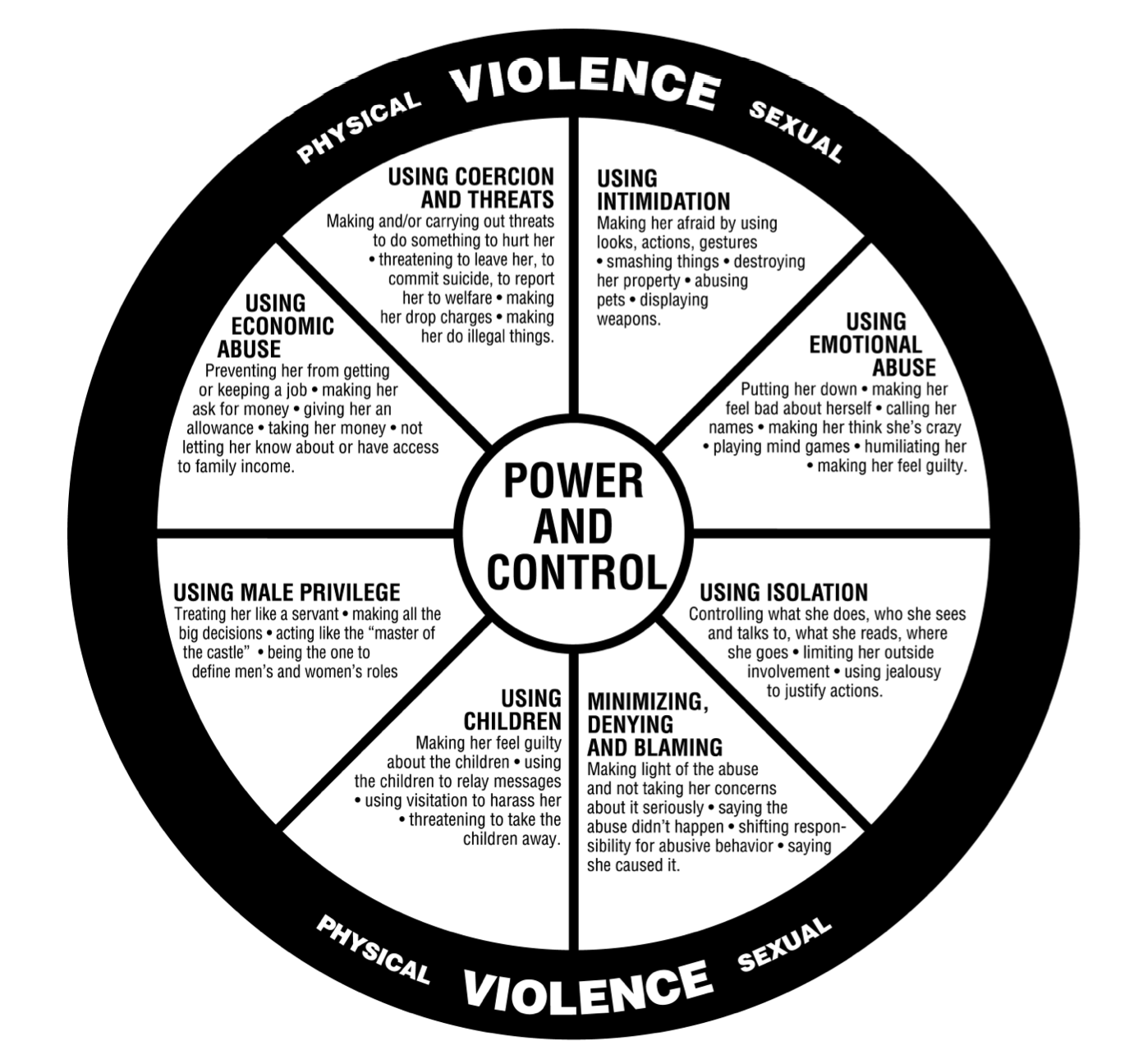
You also need to understand that certain situations of verbal/emotional put-downs may be verbal abuse, and often accompany (or are a precursor to) physical abuse. (See the Power and Control Wheel below.)

Healthline gives some red flags to the characteristics of verbal abuse: 

  • They insult you or attempt to humiliate you, but then they accuse you of being overly-sensitive. 
  • They yell or scream at you frequently. 
  • The person plays the victim while they try to make you feel guilty. (“I wouldn’t have to scream at you if you didn’t…”)
  • They get in your personal space as an act of intimidation or try to block you from moving away.
  • They gaslight you—this means they manipulate you into questioning your own version of events in order to gain more power. For example, they may convince you to doubt your memory of them saying or doing something violent or try to convince you you’re crazy.
  • They hit the wall or throw things.  
  • They want credit for not having hit you. 

Sincerely ask yourself the following questions:

  • Do I believe my spouse is putting me down with the intention to harm me, wear me down, or manipulate me?
  • Do I think there is a possibility the verbal attacks could lead to physical violence?
  • If I were to voice my concerns for how they talk to me, is there any fear that they would react with a heated backlash? 

Unless you can answer each of these questions with a confident no, these are strong indicators of verbal/emotional abuse and warning signals for possible physical abuse. Do not confront your spouse. Go somewhere safe and seek help. 

Let’s talk about Situation A.

Your spouse puts you down but they are unaware of how it’s making you feel. They are being careless with the words they use toward you—perhaps in front of the kids. But despite the unintentionality of what they say, you still feel devalued. It’s time to let them know how you feel. 

  • Approach your spouse to talk at a strategic time. Ask them if this is a good time to talk. And if it’s not, arrange a time, preferably within the next 24 hours. Don’t bring up your feelings right after they say something hateful; your emotions will be dialed up, and you want to be calm and able to think clearly when you talk. Choose a time when neither of you are tired or in a bad mood. 
  • Start on a good note. Marriage researcher Dr. John Gottman suggests opening difficult conversations with a positive. Begin the conversation with something you appreciate about your spouse. Say something like, “I know that you love me and the kids and that you’d do anything for your family.” Or, “I appreciate how hard you work to provide and take care of us.” 
  • Be specific about what you hear and how you feel. Make good use of “I” messages. For instance, “There have been many times when I’ve felt really undervalued and unloved when you’ve said certain things to me.” Name your feelings—beforehand, jot down some specific words that describe how it feels when your spouse puts you down. If it happens in front of your kids or other people, point out that it feels embarrassing or shameful. Err on the assumption that your spouse has been unaware of how they’ve made you feel. You may have to give them an example of what they’ve said. Describe the last incident and the effect it had on you. Avoid giving a laundry list of all the past wrongs they’ve done to you, though. 
  • Use a code word or sign. The point of addressing this with your spouse is help them be aware that they are putting you down and the negative effect it has on your feelings. Establishing some kind of code word or a non-verbal signal can subtly express to them, “You’re being degrading and ridiculing right now, and you need to dial it down.” This is especially helpful in front of the kids or in social situations. For instance, whenever you respond with “Oh, honey…” or you nonchalantly touch your earlobe, you can discreetly and calmly express to your spouse how they’re making you feel at the moment. 
  • Set boundaries. Let your spouse know that if they continue to ignore warning signs and keep putting you down, you’ll simply leave the room when they say something disparaging. Don’t threaten your spouse with divorce or the withdrawal of sex (although you probably won’t exactly feel “in the mood” after being put down). You set up boundaries to protect yourself, not punish others. 
  • Check your own thoughts and words. I mention this last step with a great deal of care, and I encourage you to approach it with humility and thoughtfulness. I have talked with many individuals who have felt insulted by others close to them; however, sometimes there was something within their own personality that colored the situation. Many were highly sensitive to remarks that weren’t overtly insulting, but they heard them through the filter of past negative experiences. 

For instance, one person interpreted an invitation to exercise together as an affront to their weight, an issue to which they felt particularly sensitive. Others that I’ve talked to were offended by another’s insults, but had no problem being equally insulting toward that person. Part of the process of working through this is to consider what may be going on inside you that could exacerbate these feelings. Ask yourself: Are the words I hear from my spouse truly insensitive put-downs, or is there something inside me that makes me overly-sensitive to their words? And, are there ways that I put my spouse down without me noticing it? 

Marriage cannot thrive in an environment of disrespect and insults. And no one deserves to be put down by their spouse. The above steps are a process that may take time before you see real change. There’s a chance that other things are going on under the surface of insults and put-downs being hurled your direction. If these problems persist after taking the above steps, ask your spouse to seek help with you through couples counseling. If they resist, seek professional help on your own. ☆ Sometimes it takes one person in the marriage to lead the charge toward getting help and improving the relationship before the other catches on. 

***If you or someone you know is in an abusive relationship, contact the National Hotline for Domestic Abuse. At this link, you can access a private chat with someone who can help you 24/7. If you fear that someone is monitoring your computer or device, call the hotline 24/7 at: 1−800−799−7233. For a clear understanding of what defines an abusive relationship, click here.***

Image from Pexels.com

5 Ways You May Be Putting Down Your Spouse

These things undermine your relationship.

Have you ever made a joke about your spouse and they didn’t think that it was funny?

Has your spouse ever remarked on a “weakness” of yours and you felt some way about it?

Has your spouse ever made fun of you or put you down in front of your kids?

What are some of the common ways that we unwittingly put our spouses down?

1. You talk over or finish their statements when they are speaking.

It can easily become a habit to talk over your spouse or finish their statements for them. When you do this, you are sending the message to your spouse that you don’t respect their perspective and opinion. Additionally, this can minimize them in the eyes of others (family, friends, co-workers, children). 

2. You don’t consider/obtain their opinion or input when making decisions  (i.e., the kids, family vacations, or future plans).

Teamwork is important in marriage. It takes both parts of the couple contributing to make it as strong as possible. When one person makes all the decisions, it can lead to a myopic view of the situation. Having differing options and opinions can strengthen a plan. Like a well-woven tapestry, considering and respecting the input from your spouse creates a better and holistic problem-solving strategy.

3. You MINIMIZE their strengths while you MAXIMIZE their weaknesses.

When couples get together, they often say, “Where I am weak, my spouse is strong and vice versa.” After a time, it can become problematic when the focus changes to, “I really can’t believe that my spouse can’t do that.” For example: you may be very strong at directions while your spouse needs GPS to go anywhere, even places that they have been many times before. Sitting in the car as they set up the GPS, you think, “OMG, I should have just driven. They never know how to get anywhere.” You then share with anyone who will listen that your spouse is seriously DIRECTIONALLY CHALLENGED. From there you only seem to notice their deficiencies rather than their strengths.

4. You tease your spouse too much.

Whether it is about their hair, nose or the way they eat spaghetti, teasing your spouse can be a way to bring humor to your relationship. However, too much of a GOOD THING can become a problem. If you seem to nit-pick everything about your spouse even with a hint of levity, they may feel undervalued. Find ways to build up your spouse, not tear them down—even in JEST.

5. You constantly re-do tasks that your spouse has already done.

For many spouses, there are two ways to do things: MY WAY (THE RIGHT WAY) and your way. Your spouse may feel belittled as you refold the towel, remake the bed or reload the dishwasher. You inadvertently are telling them that their efforts are not wanted, needed, or appreciated. Because only YOU can do it, the RIGHT WAY.

Zig Ziglar said, “The first step to solving a problem is to recognize that it does exist.” Recognizing that you may be putting down your spouse is the initial step. While your spouse does things differently than you or even parents differently than you, it is KEY to respect those differences. Making fun of them or negating the importance of your spouse in your life and in the lives of your children undermines your relationship. Remember that the two of you are a TEAM. 

✦ Each of you has a role to play to make your family the BEST that it CAN BE!

***If you or someone you know is in an abusive relationship, contact the National Hotline for Domestic Abuse. At this link, you can access a private chat with someone who can help you 24/7. If you fear your computer or device is being monitored, call the hotline 24/7 at: 1−800−799−7233. For a clear understanding of what defines an abusive relationship, click here.***

Image from Pexels.com

4 Reasons Why Respect Matters In Marriage

Hint: It plays a critical part in a healthy marriage.

Respect matters in marriage. 

Maybe more than anything else. 

And I’m going to tell you why. 

Respect may best be defined as the way you show true appreciation for another person. Respect is an action, not just a feeling. It’s a declaration of value for someone. We demonstrate respect by how we behave toward another person. 

And it’s fairly easy to recognize when someone respects (or disrespects) another person. 

The show of respect is usually thought of as coming from a place of inferiority. Pictures come to mind of soldiers standing at attention when high-ranking officers enter the room, or of hard-working employees speaking highly of their boss. 

Respect in a healthy marriage is different, though. It’s a two-way street. Both parties in the relationship crave and deserve equal respect from the other, and rightly so. Respect is shown in marriage not because one person is more superior than the other, but because each person recognizes the value of the other. 

In marriage, mutual respect matters. 

But why? Why does mutual respect play such a critical part in a healthy marriage? 

Here are four reasons: 

  • Mutual respect eliminates the fear of being different. Let me explain. In your marriage, you and your partner each come to the relationship as individuals. You have your own personality traits, talents, quirks, past experiences, and interests. Showing mutual respect demonstrates an appreciation for each other—differences and all. Your respect toward your spouse gives value to the differences they bring to the relationship. When mutual respect is given, it opens up a vulnerability for each person to be who they are without the fear of being devalued or judged unfairly
  • Mutual respect upholds healthy boundaries in the relationship. Even the healthiest marriages reinforce proper boundaries. When you show respect—appreciation for your spouse, you recognize certain needs. For example, I’m the kind of person who really has to have some time alone each day just to recharge. My wife respects that (even though she doesn’t have the same need), and so she knows when to give me some space. It’s important to my wife that there’s no name-calling between us, even if it’s in jest (because often things can go too far or easily be misinterpreted). I try to respect that, even though playful name-calling was a part of my upbringing. Mutual respect gives strength to uphold these boundaries. 
  • Mutual respect compels you to “check your jersey” when you have disagreements. I love this phrase (which I borrowed from Kyle Benson, a blogger for The Gottman Institute). In the heat of a conflict, it can be easy to fall into the false notion that your spouse is working against you in this team effort called marriage. Respect doesn’t take away the chances that disagreements will happen; they will, even in the best of marriages. But when you practice mutual respect in marriage—and practice it often—you are more confident that, despite the conflict, you know you and your spouse are on the same team and working toward the same thing. You can see more clearly that you’re wearing the same jersey. 
  • Mutual respect strengthens the friendship between you and your spouse. Relationship researcher John Gottman says that long-term vitality and connection is grown through intentional friendship in your marriage. In other words, marriage is healthy when you and your spouse deepen your friendship. Because it shows appreciation and value for your partner, showing mutual respect provides the space for friendship to grow. Why? Because it takes the fear of vulnerability out of the equation. My wife is my best friend because it’s with her that I can be the most vulnerable. That can’t happen without mutual respect. 

But wait… there’s more! 

BONUS REASON why mutual respect matters in marriage!

  • Mutual respect needs to be modeled to children. If you and your spouse are parents, no doubt you want to raise them to be respectful adults. A child’s primary source for lessons on respect come from watching how their parents behave toward each other. My wife and I have two daughters, and I think it’s important for them to understand how husbands and wives should treat each other—with warmth, care and respect. Hopefully, they can see that in us. Mutual respect in a marriage is essential for teaching kids to be respectful

Mutual respect matters in your marriage.  🔎 Find the ways to appreciate your spouse—differences and all—and show that appreciation on a daily basis. Declare your spouse’s value in your actions. You’ll be better friends, better parents, and better teammates

***If you or someone you know is in an abusive relationship, contact the National Hotline for Domestic Abuse. At this link, you can access a private chat with someone who can help you 24/7. If you fear your computer or device is being monitored, call the hotline 24/7 at: 1−800−799−7233. For a clear understanding of what defines an abusive relationship, click here.***

Image from Unsplash.com