

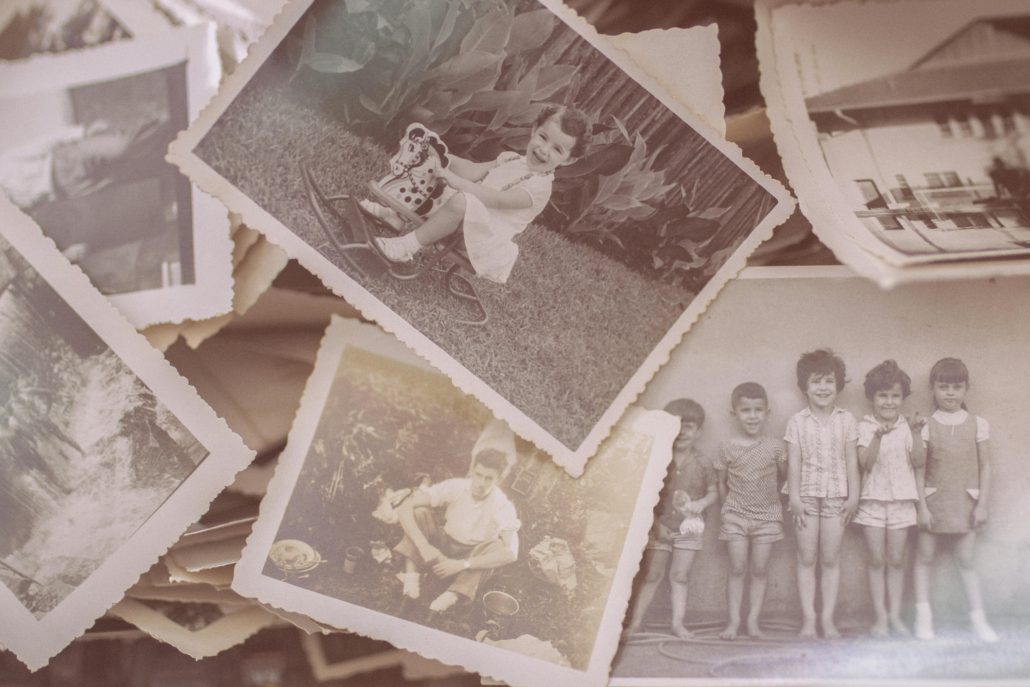
There’s a story I tell myself about my childhood.
It goes something like this: I was a pretty easy kid. My parents loved each other. My siblings and I had some spats here and there, but nothing too out of the ordinary. We laughed a lot. There were Saturday morning cartoons, tons of playing together outside, the occasional grounding, and a general sense that life was simple and safe.
But lately, as I watch my two-year-old daughter throw bananas on our glass door for sport, and my six-year-old son asks questions that would make a philosopher sweat, I’ve started to wonder if the story I tell myself is… entirely true.
Several of my close friends and colleagues have been processing the same questions. Things like: Did coming home to an empty house everyday really not bother me? Should I have been left alone at seven-years-old with my teenage siblings and their friends? Did my mom and dad enjoy being together or did they tolerate their marriage?
Because sometimes, what we remember and what actually happened aren’t the same thing.
Memory isn’t a recording device. It’s more like a scrapbook we keep rearranging.
According to Dr. Elizabeth Loftus, a leading expert on memory and false memories, our brains are constantly rewriting the past based on new experiences, emotions, and even the way we talk about what happened. “Memory is malleable,” she says. “We can be led to remember our past in different ways.”
That means the bedtime stories we heard, the way our family framed events, and even the old photos we looked at can all shape or reshape how we remember.
And if we’ve spent decades telling a particular version of our childhood? That version starts to feel like gospel.
What happens when our story starts to crack? Sometimes, it’s subtle. You hear a sibling talk about “how chaotic things were” growing up—and you think, Wait… what? Or maybe a therapist asks a question that makes a memory pop up sideways. Or maybe, like me, you become a parent and start seeing your own upbringing through a totally different lens.
And when that happens, it can feel disorienting.
Realizing your childhood wasn’t what you thought, whether it wasn’t as happy, or it was better than you gave it credit for, can trigger a whole range of emotions: grief, anger, guilt, even relief.
But here’s the good news: This is part of growing up. Even at 35.
Dr. Dan Siegel, a clinical professor of psychiatry at UCLA, talks about the power of developing what he calls a “coherent narrative” about our lives. He found that people who can make sense of their past (especially the hard parts) are more likely to have secure, healthy relationships with their children, even if their own childhoods were rough.
In short, it’s not about having a perfect past. It’s about making peace with it.
When do memory shake-ups start to happen? Usually during what researchers call “identity-shifting moments.” Big life changes. Getting married. Becoming a parent. Losing a loved one. Moving back to your hometown. Turning 30. Turning 50. Sitting in the car after a long day and realizing… huh, maybe I wasn’t the “easy kid” after all.
One fascinating study published in the Journal of Personality and Social Psychology found that our memories tend to be filtered through who we are now, not who we were then. As our identities shift, so does our version of the story.
Which explains why, when my toddler throws a tantrum that rattles the windows, I suddenly remember my mom closing her bedroom door a lot. I used to think she just really liked her alone time. But maybe—just maybe—she was overwhelmed and didn’t know how to handle my own emotional outbursts.
Here’s the truth: Our memories might not be perfect, but they’re still powerful.
Looking back with clearer eyes doesn’t mean we have to villainize anyone. In fact, it might help us extend grace to ourselves, to our parents, and to the whole messy cast of characters who shaped our early years.
It also helps us do better. Be more intentional. Choose the kind of stories we want our kids to tell themselves when they’re grown.
So if you’re ever surprised by a memory you forgot, or one you’re starting to see differently, you’re not broken. You’re evolving. And that’s a beautiful, brave thing.
Don’t be afraid to tell a new story. One that holds both the good and the hard. One that lets your past be honest and your present be hopeful.
And if your toddler ever chucks a banana at your face, just know: You have the opportunity to give them something sweet to remember (even if it’s a little mushy).
Lauren Hall is the President and CEO of First Things First. Contact her at lauren@firstthings.org.
Was This Helpful?
More stuff you'll love

How to Talk to Your Teen About Drinking
Conversations around alcohol can impact life or death situations.




Thoughts? Leave a Comment