I try to keep one eye on the calendar. That is part of choosing topics to write about, after all: talk about what people are thinking about when they are thinking about it. Holidays, seasons, school rhythms, cultural moments, whatever emotional casserole we are collectively carrying that week.
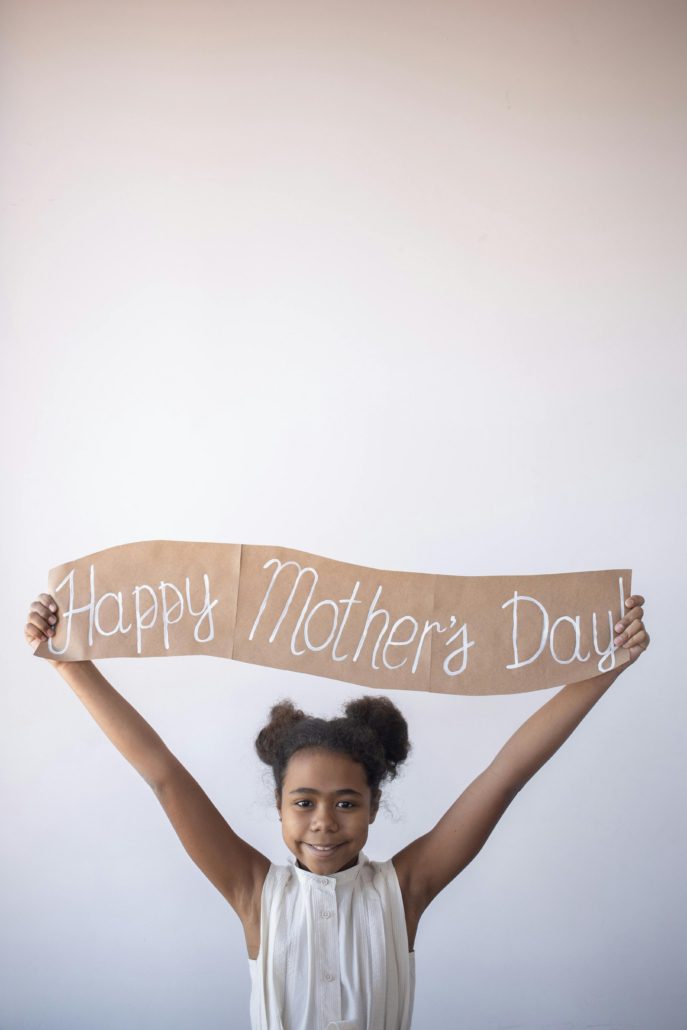
And yet, somehow, I missed Mother’s Day.
To be clear, I did not miss Mother’s Day in my actual life. I knew it was Mother’s Day when it arrived. I accepted the hugs, the cards, the sweet little gestures, the “please do not make me decide what we are eating today” energy of it all.
What I missed was writing about it.
As a columnist.
As a mom.
As a person who tries very hard to notice these things before they happen, not several days later when the internet has moved on and every florist in America is taking a nap.
Mother’s Day was not even on my radar as a timely column topic. Which is ironic, because I am a mother. You would think I might remember the holiday specifically designed to celebrate the demographic group to which I belong. But alas, no. My brain looked at Mother’s Day, shrugged politely, and kept scrolling through the list of 10,000 other things it was trying to hold.
There are one million reasons this happened. Work. Kids. Schedules. Groceries. Appointments. End-of-school-year chaos. The tiny but relentless administrative tasks of family life. But the biggest reason is this: my brain is overloaded.
And I know that.
I also know I am not alone.
Researchers often describe this invisible work as cognitive labor or the mental load. It is not just doing the task. It is noticing the task, remembering the task, planning the task, anticipating what happens if the task is not done, and somehow being the person who knows where the extra glue sticks are.
A 2024 study of mothers of young children found that mothers reported carrying about 73% of the cognitive household labor, compared with about 64% of the physical household labor. The same study found that carrying more cognitive labor was associated with more depression, stress and burnout, as well as lower overall mental health and relationship satisfaction.
So when moms say they are tired, they may not only mean they need sleep. They may mean they are tired of being the family calendar, emotional weather app, snack inventory manager, appointment tracker, school-spirit-week interpreter and keeper of all missing shoes.
And then comes the advice we hear all the time: “Just ask for help.”
Which sounds simple.
It is not.
Moms may not ask because the people they would ask are also drowning. Their spouse is working late. Their sister is juggling her own kids. Their friend is caring for aging parents. So instead of asking, moms do the math in their heads and decide, “Never mind. I’ll just handle it.”
Some moms do not ask because asking still feels like work. You have to identify the need, choose the person, explain the task and maybe remind them anyway. By the time you have assigned the job, you could have done it yourself and eaten three stale crackers over the sink.
Some moms do not ask because they are afraid the person will say no.
Others are afraid the person will say yes.
Because what if they help, but they do it wrong? What if the laundry comes back folded in a way that makes no architectural sense? What if the lunchbox contains the wrong yogurt and now a child is writing their memoir about abandonment?
That last one is hard to admit, but it matters. Sometimes the mental load is reinforced by perfectionism, fear and the belief that if we want something done “right,” we have to do it ourselves. But “right” can become an expensive word when the cost is our peace.
And then there are moms who truly do not have someone to ask. Or they feel like they do not. Some are parenting without a partner. Some are far from family. Some are in relationships where asking for help is unsafe, unproductive or emotionally costly. Some are surrounded by people but still feel profoundly alone.
That loneliness matters. Research consistently links social support with maternal mental health. Feeling supported helps us stay well.
So what do we do when we feel overloaded and “ask for help” feels impossible?
Start smaller than a rescue.
Support does not have to look like someone arriving with a casserole, taking the children, deep-cleaning the house and fixing the printer. Lovely? Yes. Likely? Not always.
Support can be a shared calendar. A carpool swap. A grocery delivery. A text that says, “Can you remind me Friday is pajama day?” It can be a parent group, faith community, therapist, school counselor, pediatrician, postpartum organization or neighbor who also looks like she is one permission slip away from collapse.
And sometimes the most powerful help is not adding another person.
Sometimes it is subtracting a demand.
This is where boundaries come in.
Boundaries can sound harsh, like slamming a door. But healthy boundaries are often much quieter. They sound like, “We can’t make it this time.” “I’m not available for that.” “That doesn’t work for our family right now.” “I need more notice.”
For overloaded moms, saying no is not selfish. It is load management.
Every yes has a receipt. Yes to the extra committee means yes to more emails. Yes to the elaborate birthday plan means yes to late-night ordering, wrapping, transporting and cleaning. Yes to being endlessly available means no to rest.
Not everything deserves the same amount of you.
That sentence is easy to type and hard to live.
My missed Mother’s Day column was funny, yes. A little embarrassing, certainly. But also useful. It told me my brain is carrying too much in too many invisible places.
So I am going to take a step back.
I am going to write down what I am holding instead of pretending I can keep storing it all in the cloud of my own skull. I am going to ask what can be delegated, what can be deleted and what can be done imperfectly by someone else. I am going to practice saying no before my body has to say it for me.
And I am going to look at the calendar again.
Not just so I can catch the next holiday.
But so I can remember that I am on it, too.
Lauren Hall is the President and CEO of First Things First. Contact her at lauren@firstthings.org



Thoughts? Leave a Comment